Project Overview
I. Core Integration Scenarios: As an Endpoint This section demonstrates how AI extraction capabilities can be embedded as a plug-in or centralised ...
- Client
- 2DQY Project
- Project Year
- 2026
- Deliverables
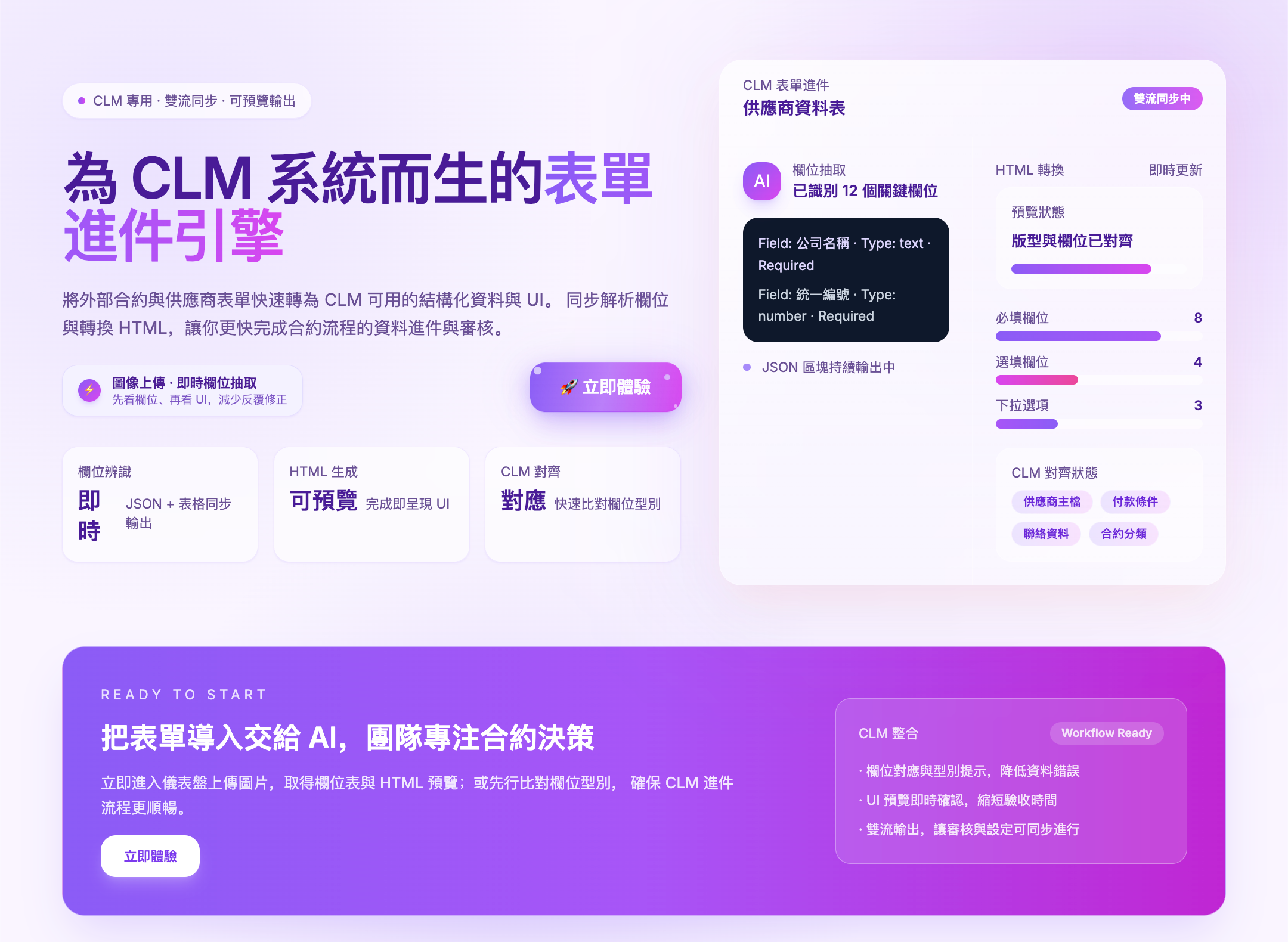
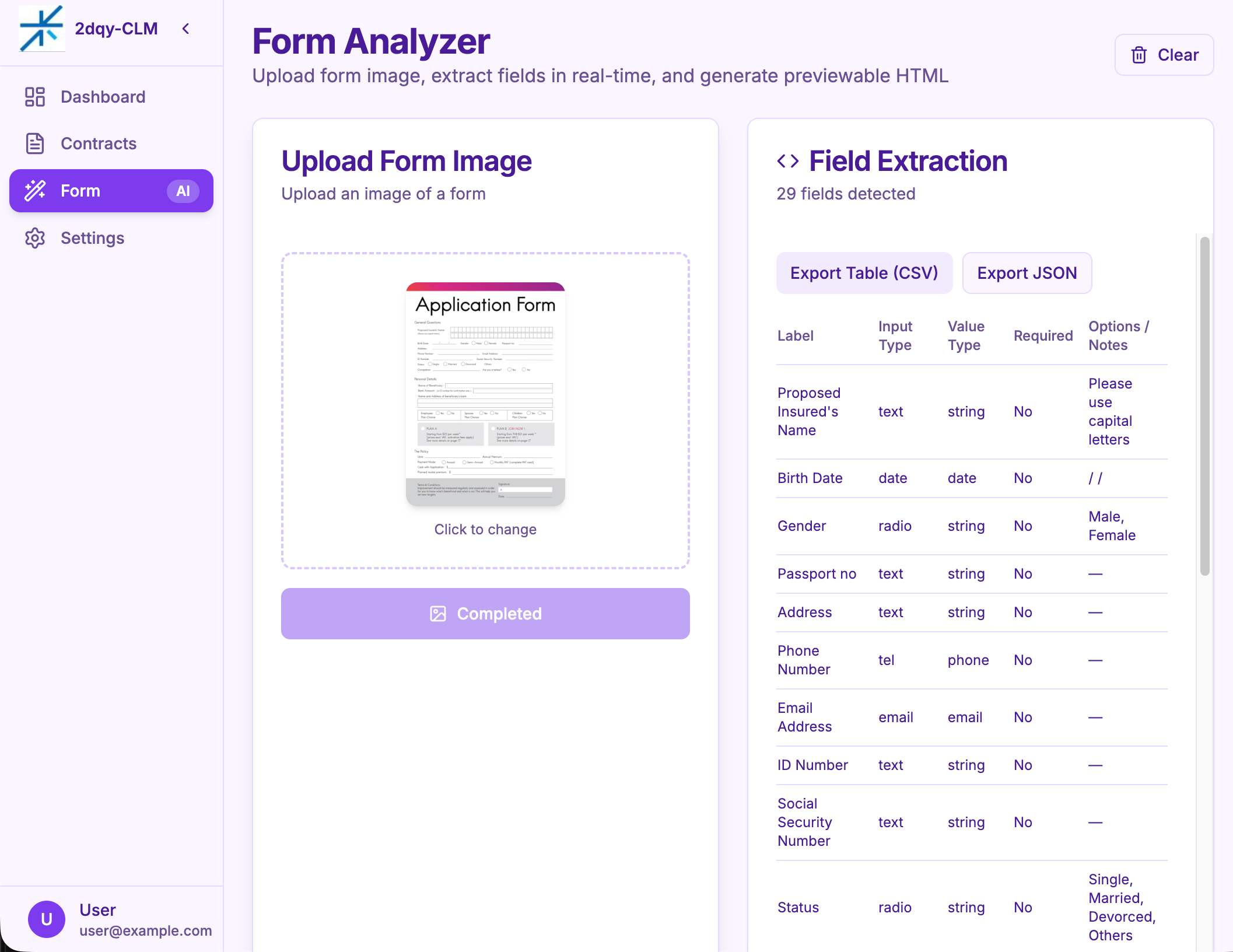
- Quickly convert forms into structured data and HTML for use in CLM systems
AI Extraction Form
I. Core Integration Scenarios: As an Endpoint
This section demonstrates how AI extraction capabilities can be embedded as a plug-in or centralised service within existing tech stacks.
| Scenario Category | Core Logic & Technical Implementation | |---|---| | AI Agent Orchestration | Equip LLMs with the `extract-fields-from-image` function to close the perception-decision-action loop (e.g., auto-completion, initiating approval workflows). | | ETL Pipeline Automation | Build an end-to-end pipeline: scanned document → JSON fields → ETL, enabling seamless data flow from images into CRM/ERP/CLM databases. | | RPA Recognition Enhancement | Replace legacy coordinate-based field detection with structured field attributes and coordinates returned via the endpoint—improving RPA script resilience and stability. | | Data Standardisation Middleware | Attach post-processing logic to invoke additional AI capabilities—e.g., address parsing, phone number formatting, or currency auto-detection—to output clean, standardised data. | | Dynamic UI Rendering Engine | At runtime, frontend frameworks (React/Vue or mobile apps) call the endpoint to retrieve field definitions and dynamically render form components. | | Excel Batch Collaboration | Pre-extract schema, map local/cloud Excel (xlsx) data to target fields, then batch-generate HTML/PDF outputs or construct submission payloads directly. |
---
II. Business Value: Single-Platform Deployment
This section focuses on solving concrete operational pain points—showcasing how the endpoint directly boosts productivity.
1. Process Automation & Efficiency Gains
- Legacy Document Digitisation: Convert scanned forms directly into web-ready forms—bypassing laborious manual UI development and drastically cutting human effort for historical archive processing.
- Contract Onboarding Automation: Accurately extract core contract fields (parties, amounts, clauses) and auto-generate intake interfaces—accelerating the flow from signature to system ingestion.
- Low-Code Scaffolding: Use image-to-HTML conversion to generate starter templates for low-code platforms; developers need only minor incremental adjustments, slashing project delivery time.
2. Quality Control & Compliance
- Automated Audit & Reconciliation: Instantly compare extracted fields against master data (e.g., tax IDs, amounts, dates); flag anomalies automatically and route only disputed items to human review.
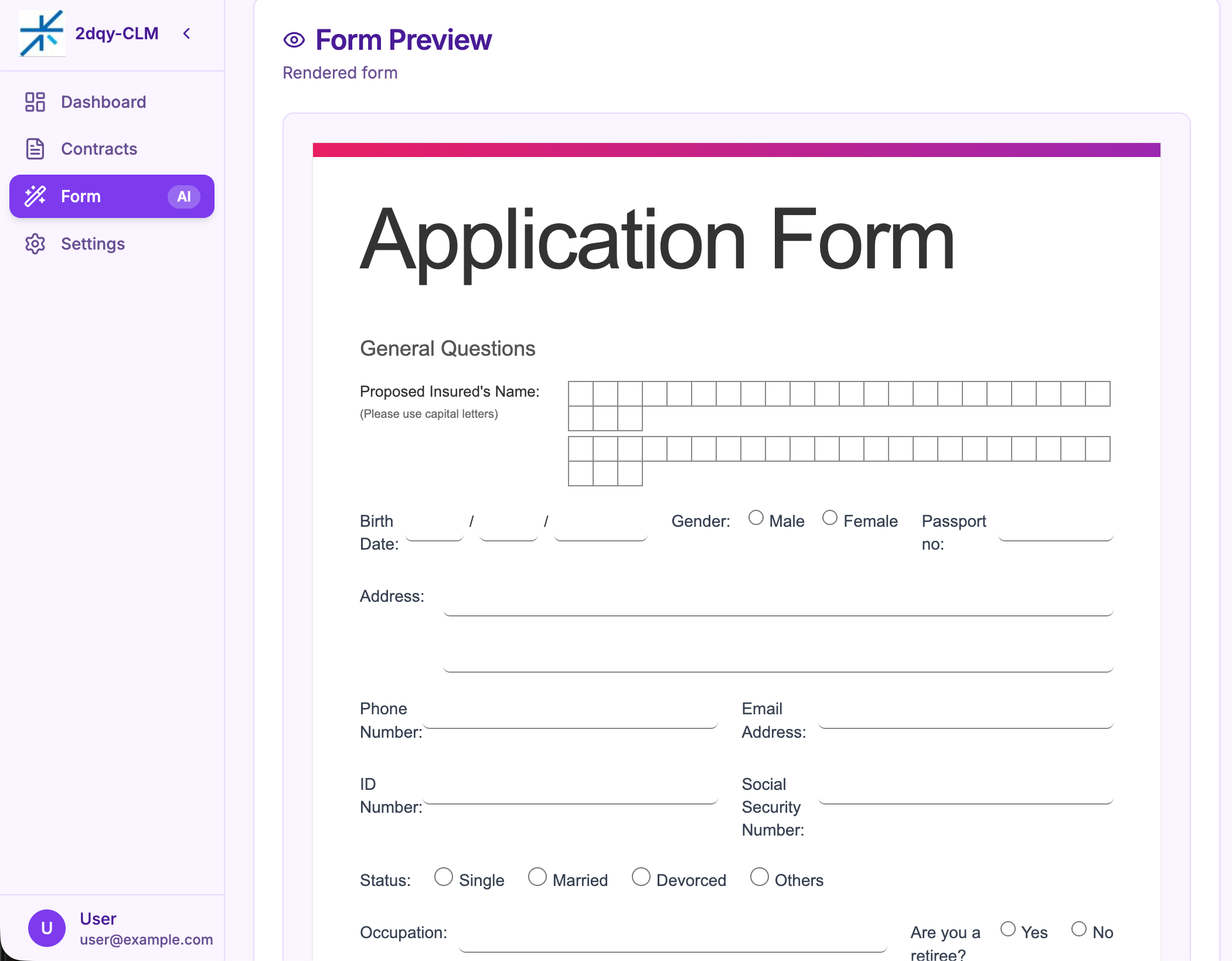
- OCR Closed-Loop Quality Assurance: Implement a ‘recognise-validate-preview’ workflow—enabling reviewers to visually cross-check field types against HTML previews, reducing misrecognition at source.
- Compliance & Audit Trail: Simultaneously output JSON (for system reconciliation) and HTML preview (as human-readable, audit-ready evidence)—ensuring both structural integrity and traceable documentation.
3. Standardisation & Collaboration
- Multi-Supplier Form Harmonisation: Map heterogeneous templates from diverse sources onto a unified field model, delivering standardised UIs that integrate seamlessly with downstream CLM/ERP workflows.
- Human-in-the-Loop (HITL) Workspace: Enable an ‘80% auto-extraction + 20% human correction’ model—where staff correct only discrepant fields, then commit final results to database or downstream APIs with one click.
- Rapid Prototype Alignment: Deliver early prototypes using field tables + live form previews—letting business stakeholders validate requirements before development begins, avoiding costly rework.
---
> 💡 Core Value Summary: > By encapsulating extraction as an endpoint, this capability evolves beyond a standalone OCR tool—becoming an intelligent bridge between unstructured visual input and structured business logic.