Project Overview
AI Interview App Overview One-sentence summary The AI Interview App is an AI-powered mock interview tool that automatically generates role-specific...
- Client
- 2DQY Project
- Project Year
- 2026
- Deliverables
- A structured AI mock interview proof-of-concept that generates job-specific questions, guides candidates through answers and follow-ups, and produc...
AI Interview
AI Interview App Overview
One-sentence summary
The AI Interview App is an AI-powered mock interview tool that automatically generates role-specific questions based on job descriptions and candidate profiles, guides users through practice responses and follow-up questions, and delivers a scored evaluation report with actionable improvement suggestions.
Project positioning
This project aims to provide job seekers with a friendly, clear and structured mock interview experience — helping them rehearse common questions, reflect on personal experience, build confidence in verbal expression, and identify strengths and development areas across role fit, answer clarity and professional presentation.
It is not a generic chatbot, but a purpose-built AI Interview Engine with a fixed interview flow, question-design logic, follow-up mechanism and scoring framework. It is especially suited for employment support, pre-employment training, recruitment preparation and career coaching.
Key features
1. Job and candidate profile setup
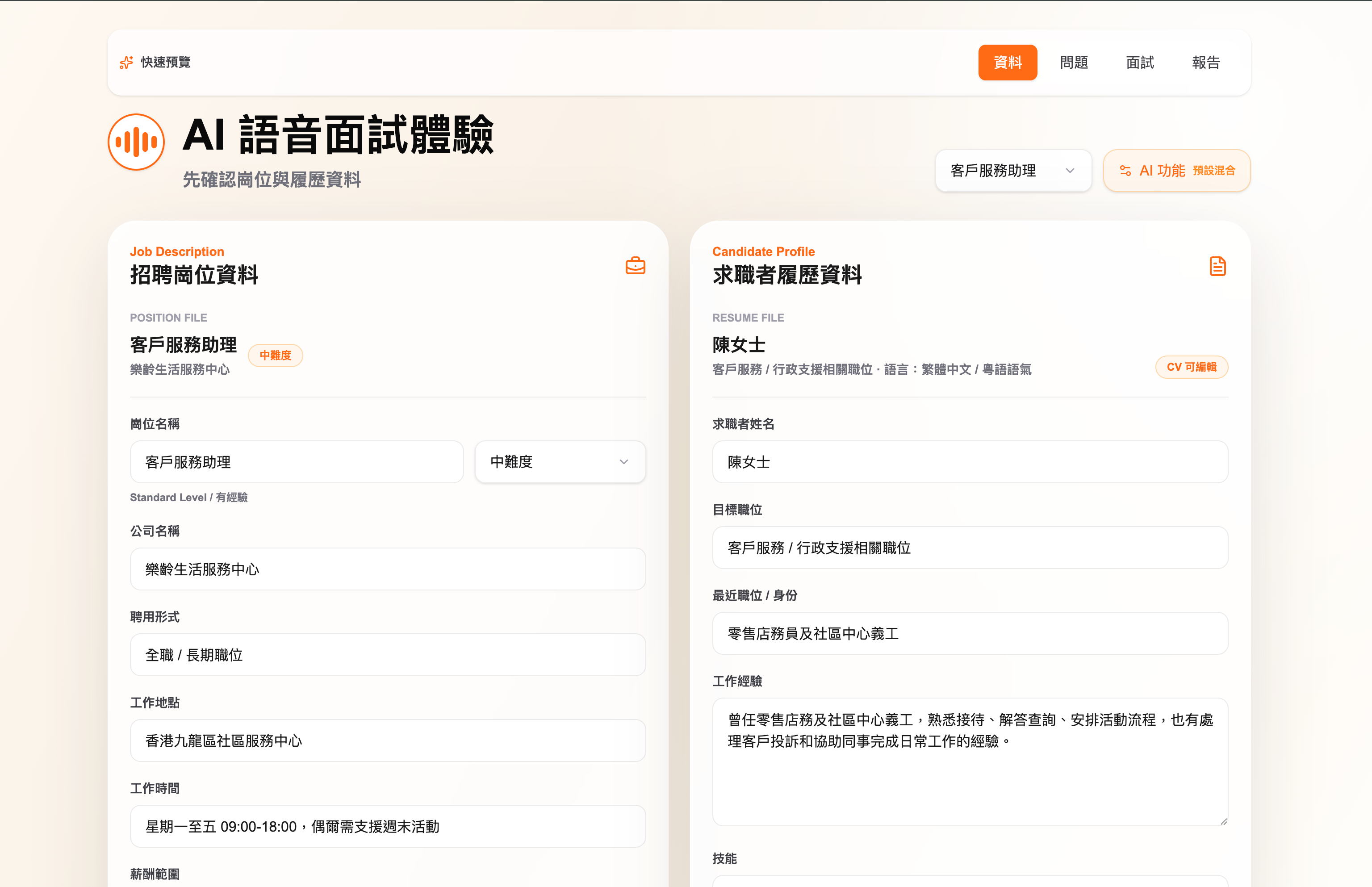
The system provides default job and candidate profiles, which users can customise as needed, including:
- Job title, company, location, working hours and compensation & benefits
- Responsibilities, requirements and job description
- Candidate’s work experience, skills, education and certifications
- Availability, job preferences and preferred interview language
The AI uses this information to generate highly relevant, realistic interview questions.
2. AI-generated personalised interview questions
Based on the job profile, candidate background and a fixed competency framework, the system automatically generates five core interview questions.
The five questions cover:
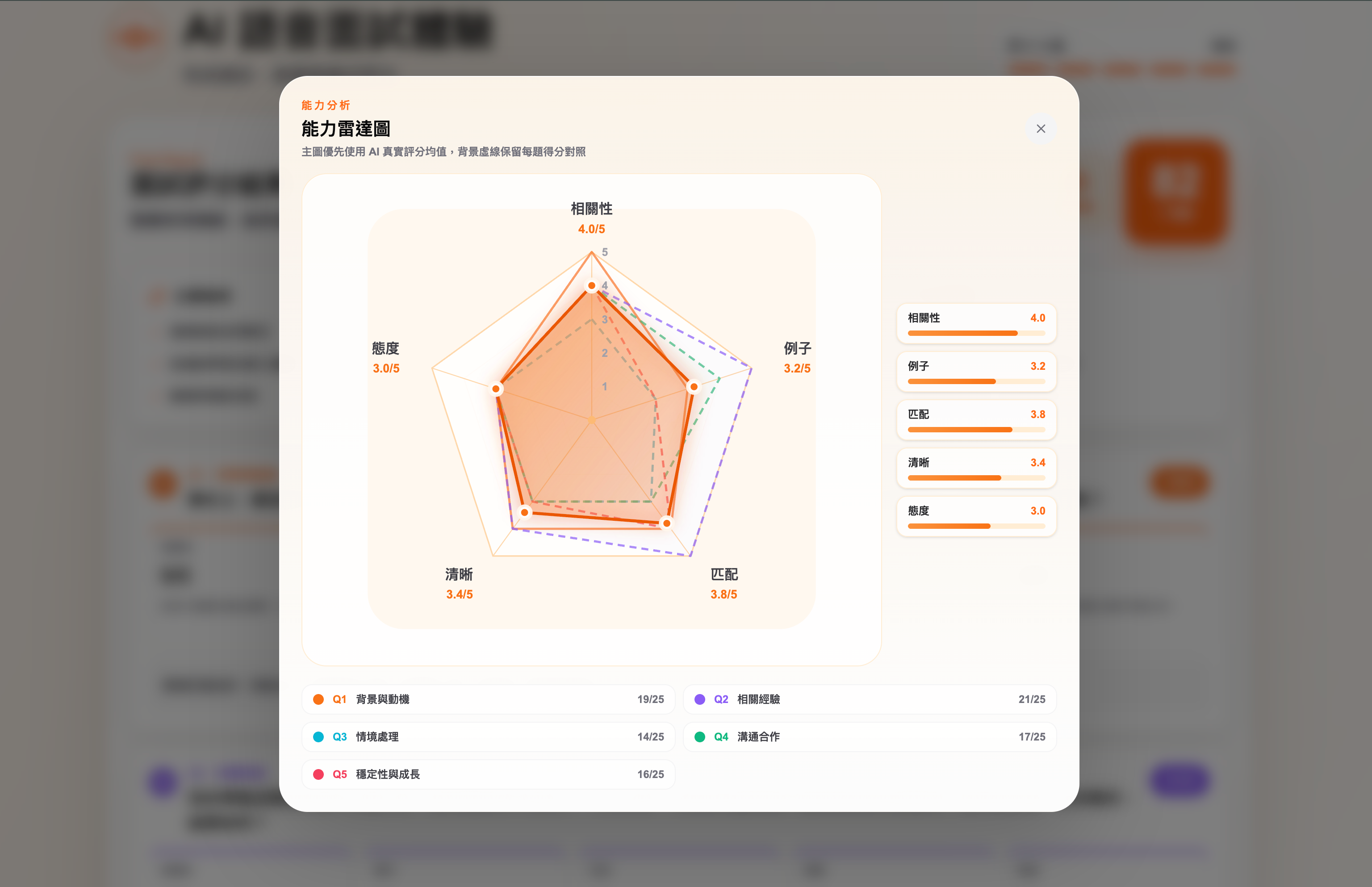
| Q# | Theme | Assessment focus | |---|---|---| | Q1 | Background & motivation | Self-introduction, career motivation and alignment with the role | | Q2 | Relevant experience | Past experience, transferable skills and day-to-day execution ability | | Q3 | Situational judgment | Approach to challenges, unexpected events or high-pressure scenarios | | Q4 | Communication & collaboration | Interaction with colleagues, supervisors, clients or service users | | Q5 | Stability & growth | Readiness for onboarding, learning mindset, career expectations and retention potential |
Questions are phrased in a supportive, clear and encouraging tone — avoiding pressure or stigmatisation.
3. Question review and editing
Before starting the mock interview, users can review and adjust the AI-generated questions.
Supported actions include:
- Viewing each question’s theme and assessment intent
- Manually editing question wording
- Regenerating individual questions
- Regenerating the full set
- Confirming to proceed to the formal interview flow
This allows career advisors, programme staff or recruitment support teams to quality-check questions before use — ensuring relevance to target users and context.
4. Simulated interview flow
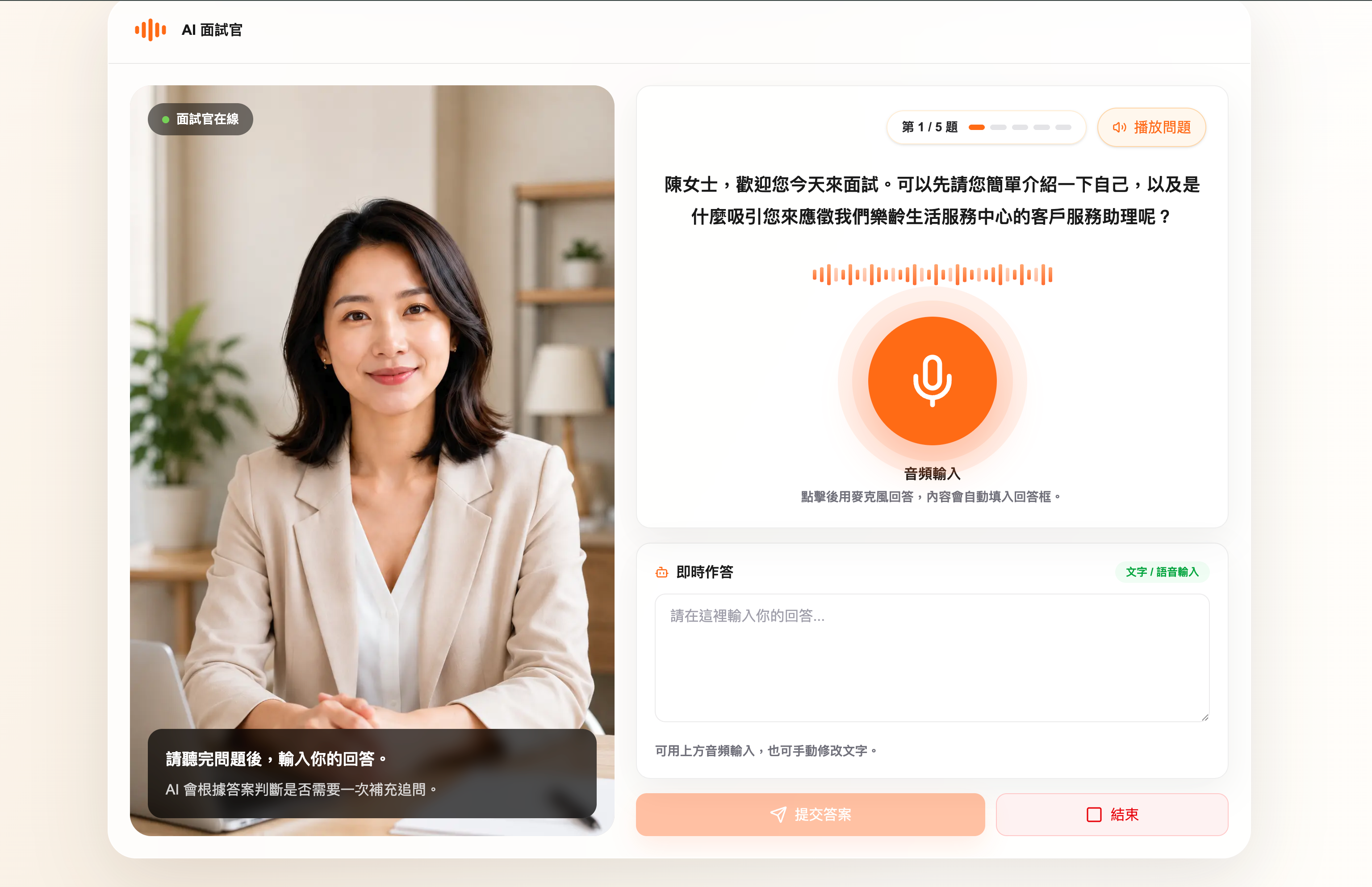
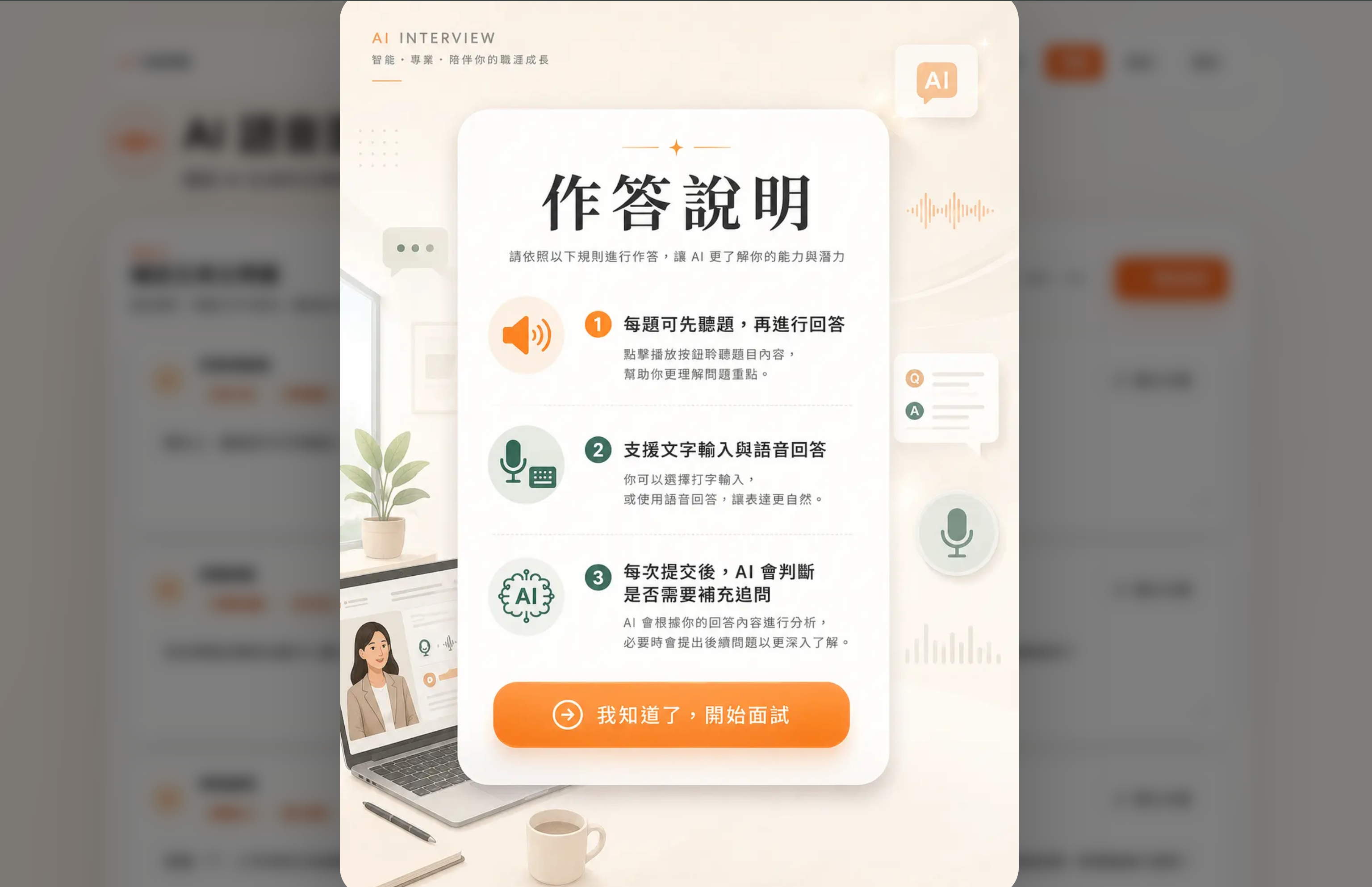
The formal interview proceeds sequentially from Q1 to Q5. Each question can be played aloud via text-to-speech; candidates respond in writing.
The flow includes:
- Display of the current question
- Text-to-speech support for question delivery
- Candidate text input
- AI analysis of the response
- One optional follow-up question per main question (if warranted)
- Final report generation upon completion
Each main question triggers at most one follow-up; total follow-ups are capped to maintain engagement and avoid fatigue.
5. AI scoring report
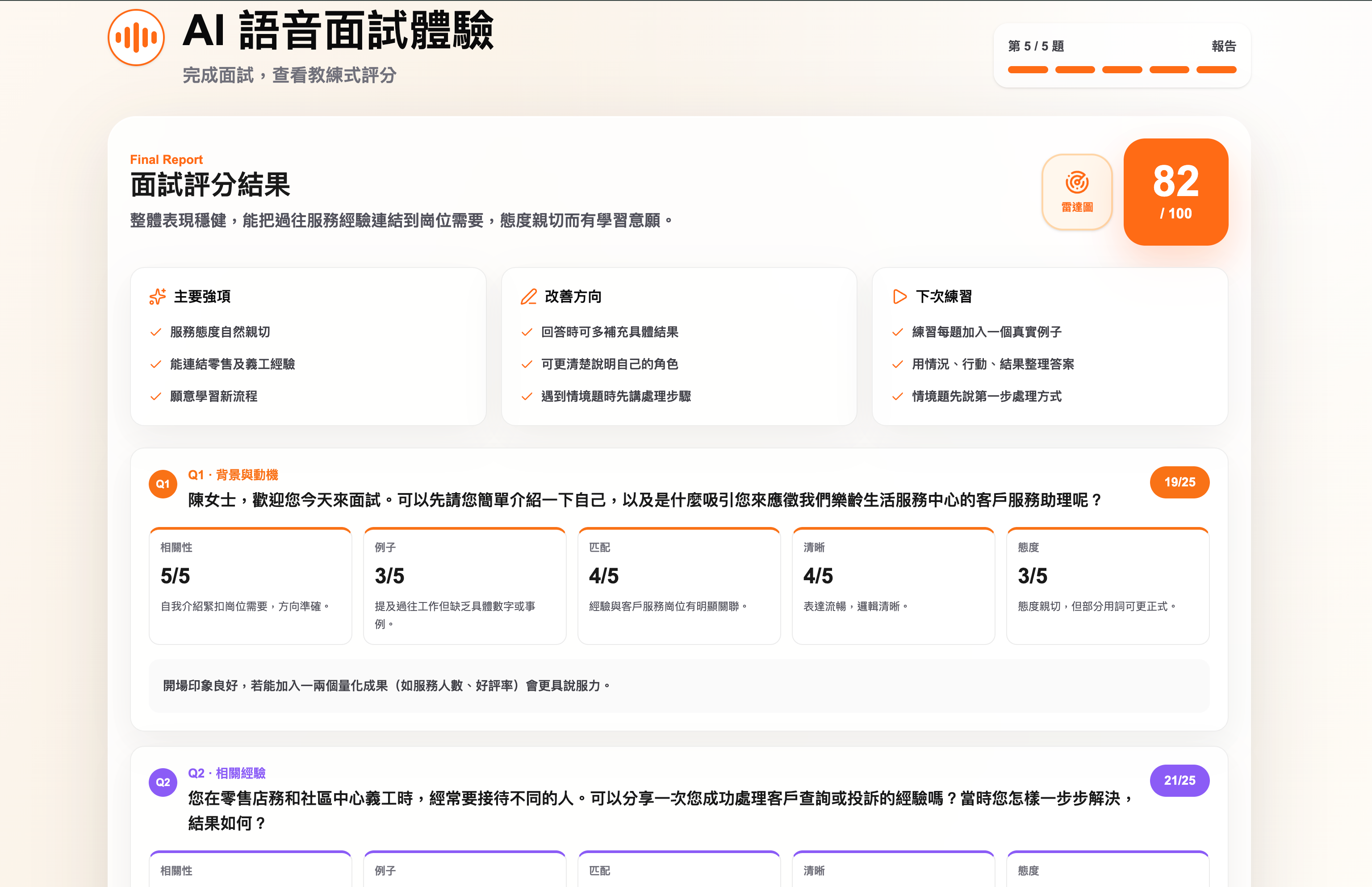
Upon completion, the system generates a comprehensive evaluation report for both candidates and coaches.
The report includes:
- Overall score
- Summary feedback
- Performance breakdown by assessment dimension
- Analysis of each response
- Candidate strengths
- Areas for improvement
- Next-step practice recommendations
The report supports post-interview reflection, individualised coaching, training impact tracking and follow-up practice planning.
Use cases
Employment support services
Suitable for social welfare agencies, employment centres and NGOs supporting job seekers to practise interviews and build confidence and preparedness ahead of real interviews.
Pre-employment training and workshops
Ideal for job-search skills workshops, pre-employment courses or group sessions — enabling participants to practise with real job contexts and receive immediate, structured feedback.
Personalised career coaching
Coaches can generate tailored questions based on a candidate’s profile and target role, then use the scoring report as a foundation for discussion and goal-setting.
Recruitment and talent matching preparation
Before referring candidates to employers, organisations can assess communication ability, motivation, role understanding and potential training needs.
Self-directed interview practice
Job seekers can practise independently — without a human interviewer — to rehearse common questions, refine answers and identify improvement pathways.
Product value
- Standardises interview preparation, reducing time spent manually designing questions
- Generates truly personalised questions aligned to specific roles and candidates
- Uses empathetic language to reduce practice-related anxiety
- Supports speech-enabled question delivery for greater realism
- Delivers concrete, actionable feedback via the scoring report
- Enables more effective career coaching, training delivery and outcomes tracking